About this finishing
Print. The image is printed on the top quality 10-ink HP Z9PS printer on HP matte 270 g / m2 paper. You can choose any size to an accuracy of 1 cm. A margin of 5 cm around the image is added to the size of the motif.


You can find a detailed description about our finishings
here.
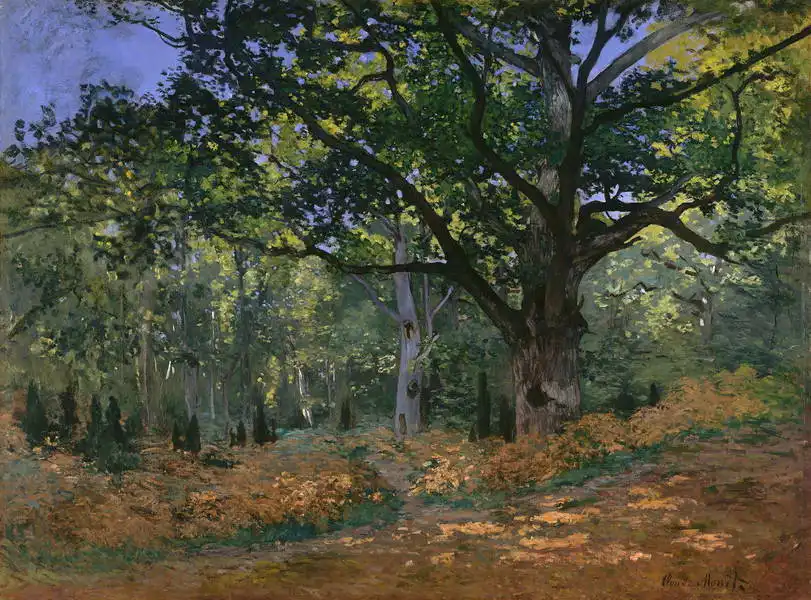
The Bodmer Oak, Fontainebleau Forest
Date:
1865Location:
Metropolitan Museum of ArtThis work depicts the famous oak tree called Bodmer in the woods of Fontainebleau.
Claude Monet spent some time painting in this area, focusing on the light, color and atmosphere of the setting.
The painting depicts a monumental oak, known as the Bodmer Oak, in Fontainebleau Forest. Monet pays attention to the variability of light that refracts on the leaves of the tree and dances on the surrounding
landscape background. The colors are probably deliberately distorted into
impressionistic hues, emphasizing the movement and momentary character of the scene.
The tree may be the dominant element in the painting, with detailed depictions of bark and branches. The atmosphere of the forest of Fontainebleau can be captured by shadows and light refractions in green tones. Monet often painted outdoors (en plein air), which allowed him to capture immediate sensations and impressions.
Monet painted picture The Bodmer Oak, Fontainebleau Forest in 1865. Prevailing color of this fine art print is green and its shape is landscape. This art piece is located in Metropolitan Museum of Art. This image is printed on demand - you can choose material, size and finishing.
Claude Oscar Monet (1840-1926). A native Parisian, who thoroughly developed the idea of
Impressionism. Monet almost scientifically studied the effect of light on different objects. He devoted himself to so called transitory states, which quickly led him to work with colour and light, his paintings acting on the viewer from the first impression. His use of open-air painting and objects which were special only because of light opened the way for the beginnings of modern painting. Monet’s
Impression, Sunrise (1874) not only gave the name to the whole art movement, but secured Monet a place among the best painters of all times. At one time, he resided in London and created his famous study
Houses of Parliament (Monet wondered, How could the English painters paint Parliament when it cannot be seen for the fog?). In the
Giverny, which became his favourite retreat after the death of his wife, he painted motifs from his garden and the popular series
Water Lilies - the world of the water was as poetic and mysterious as a primordial paradise.




 776 273 496