About this finishing
Print. The image is printed on the top quality 10-ink HP Z9PS printer on HP matte 270 g / m2 paper. You can choose any size to an accuracy of 1 cm. A margin of 5 cm around the image is added to the size of the motif.

You can find a detailed description about our finishings
here.
Cliffs in Etretatu
Date:
1869Medium:
oil on canvasLocation:
Van der Heydt Museum, Wuppertal, GermanyDimensions:
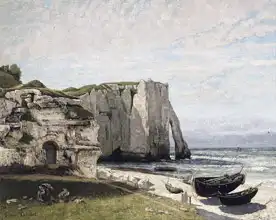
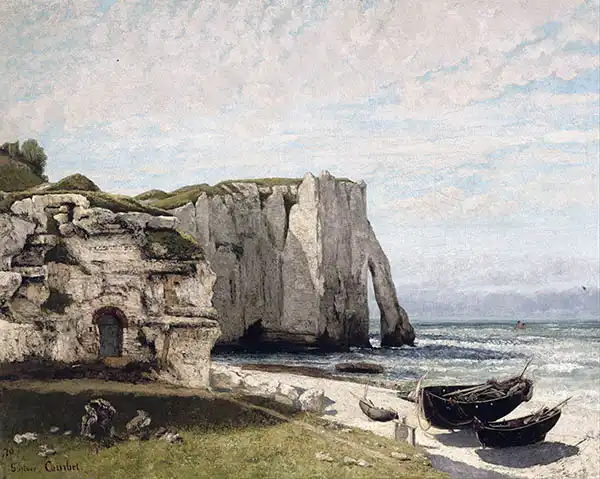
114 x 93The picture shows a picturesque seascape with high rocky cliffs towering over the beach. In the middle of the cliffs, an opening can be seen, creating a natural rock gate. On the sandy shore, wooden fishing boats are visible, one overturned and the other standing up. In the left part of the picture there is a tastefully placed rock overhang with openings, which could have served as a shelter or storage area. The sky is partly cloudy, but sunlight penetrates the clouds and illuminates the scene. Overall, the image has a calm and relaxed feel.
This description was created by artificial intelligence, please be indulgent.
Courbet painted picture Cliffs in Etretatu in 1869. Prevailing color of this fine art print is vivid and its shape is landscape. Original size is 114 x 93. This art piece is located in Van der Heydt Museum, Wuppertal, Germany. This image is printed on demand - you can choose material, size and finishing.
Gustave Courbet (1819 - 1877). French painter regarded as a leading figure of French
realism of the 19th century. In 1839, he went to study law in Paris, but instead devoted himself to painting (he copied works by Spanish, Venetian and Dutch masters). His first success was in the Salon in 1849, when he received the gold medal for his painting Afternoon in Ornans. Courbet was inspired by
Dutch masters (
Rembrandt, Hals and others). His influence was also Giorgione and
Tizian. In the beginning, he pursued the track of austere rules tied to academicism that, for his open-minded nature, was too strict. He therefore painted according to the
romanticists (
Delacroix and Géricault). With the painting Funeral in Ornans, in which he captured his grandfather’s funeral, he distanced himself from
romanticism and has since been considered a painter of
realism.




 776 273 496