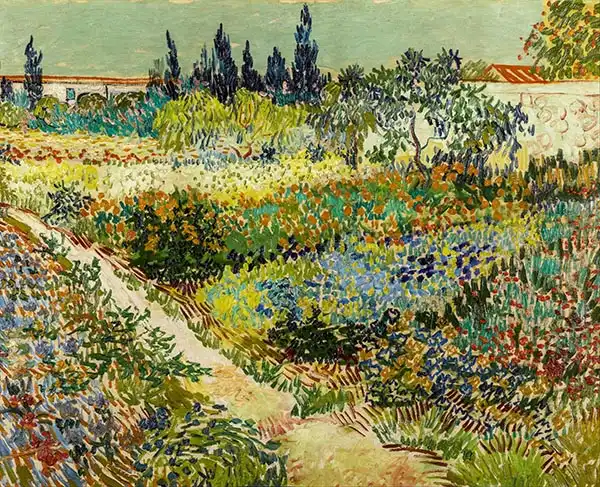
Flowering Garden with a Path is an oil painting by the Dutch painter Vincent van Gogh , created in 1888 during his stay in southern France. This painting is known for its vivid colors and joyful depiction of a blooming garden. The painting depicts a garden near the city of Arles in France, where Van Gogh spent part of his artistic life. This region was an inspiration for him because of the beautiful countryside . In the middle of the picture there is a winding path that leads the viewer's gaze deeper into the garden. This path gives the image a spatial perspective and a positive atmosphere, as if inviting you to walk through the garden. Van Gogh's characteristic use of visible brush strokes is evident in the painting. These brush strokes add texture to both the flowers and the path, contributing to the overall impression of spontaneity and energy.
Van Gogh was influenced by Japanese art, which is evident in some of his paintings, including this one. The garden is shown from a bird's eye view, and the flowers are stylized and interwoven, which is characteristic of Japanese art. The painting, while depicting a realistic subject, is noted for its stylization and emotional expression. The colors are saturated and emphasize Van Gogh's love of nature and its beauty.
Prevailing color of this fine art print is vivid and its shape is landscape. This image is printed on demand - you can choose material, size and finishing.
Vincent Willem van Gogh (1853-1890). Dutch painter belonging to Post-Impressionism. His paintings (some 900 paintings and 1,100 drawings and sketches) are among the most famous in the world and are sold for exorbitant sums (except for those in our shop). Parisian Impressionists He lived in Paris from 1886 and was influenced by the use of bright colours - most of his works were painted during this period. In his paintings, Gogh uses contrasting colours (often blue and orange - he said that I want to use colours other contrasts to each of them shone even more to contrast a man and a woman). He was known for his excesses and amputated an ear after the break-up of his friendship with Gauguin. There is a lot of speculation about this incident (he possibly suffered from heavy metal poisoning from paint that had caused mental problems). In 1890, unfortunately he committed suicide.
Trusted by our customers. Our customers have been satisfied with us for a long time. We appreciate it and thank you for your trust. You can find more reviews and details of our service ratings on Trustpilot.com.




 776 273 496
