Craftfineart.com
Search
it
Oblíbené položky
Košík
È SPUNTATO IL NOSTRO SCONTO
ESTIVO, USA IL CODICE sale10

Giuseppe abita in Egitto

James Jacques Joseph Tissot

×
Le nostre proposte di design:
semplicità
eleganza
moderno
vintage
classico


Giuseppe abita in Egitto

ID: #4428 | Realismo | Persone

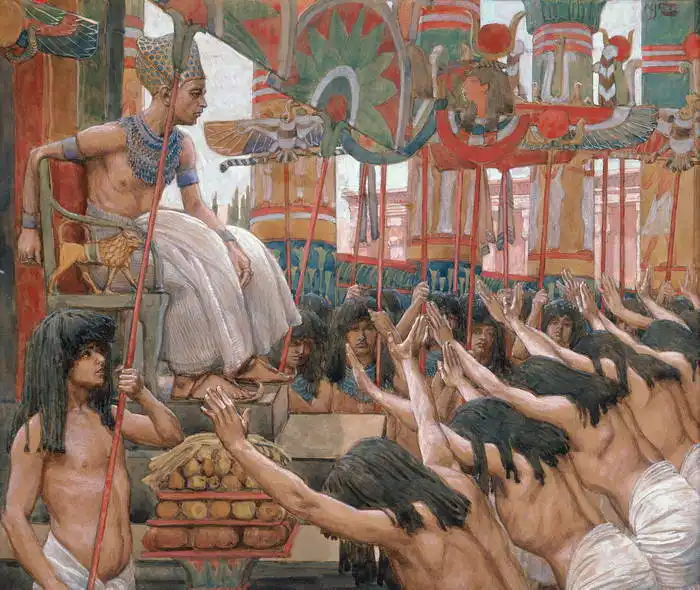
L'immagine mostra un faraone egiziano seduto sul suo trono circondato da cittadini egiziani. Il faraone è vestito in abiti tradizionali con un vistoso copricapo e tiene in mano un lungo scettro argentato. Intorno a lui ci sono persone in abiti semplici, probabilmente sudditi, che rendono omaggio o portano doni. Sullo sfondo si vedono colonne ed edifici con motivi e simboli egizi. La scena ha un'atmosfera solenne e storica, che sottolinea il potere politico e religioso del faraone.
Creato da un'intelligenza artificiale, si prega di essere indulgenti.

Prevailing color of this fine art print is varietà di colori and its shape is paesaggio. This image is printed on demand - you can choose material, size and finishing.

French painter and illustrator Jacques Joseph Tissot (1836-1902), later known as James Tissot, was born into a Catholic textile and a hat merchant family. Despite his father’s disapproval, Tissot wanted to become a painter. His mother supported him, however, and so at the age of 20 he went to Paris, where he enrolled at the Ecole des Beaux-Arts. He successfully completed his studies and soon exhibited five paintings of scenes from Goethe Faust. He also exhibited his paintings with a medieval theme, but a turning-point came in 1863. Tissot began capturing portraits of modern life in Paris - Women in Paris - admirers of the circus. His paintings were positively received and immediately his fame equalled that of his peers, including Claude Monet. After fighting in the Franco-Prussian war, he moved his work back to London, where he painted modern and elegantly clad women. After the death of his wife Kathleen Newton, he again moved to Paris, where he lived and worked until his death. He was offered membership to artistic groups of various styles, but he never accepted such offers and was faithful to realism.

Giuseppe abita in Egitto

James Jacques Joseph Tissot

Motif size

Total size: 80 x 67 cm

Material


Finishing


Frame & passepartout

colour of passepartout
none

Selected finishing

Matte paper (print)
Share this settingShare this setting
Print. The image is printed on the top quality 9-ink HP Z9PS printer on Fomei Cotton Smoooth g / m2 paper. You can choose any size to an accuracy of 1 cm. A margin of 5 cm around the image is added to the size of the motif.

ZoomZoom

You can find a detailed description about our finishings here.

:
41 €

Shipping date: 2 days

Giuseppe abita in Egitto

ID: #4428 | Realismo | Persone

L'immagine mostra un faraone egiziano seduto sul suo trono circondato da cittadini egiziani. Il faraone è vestito in abiti tradizionali con un vistoso copricapo e tiene in mano un lungo scettro argentato. Intorno a lui ci sono persone in abiti semplici, probabilmente sudditi, che rendono omaggio o portano doni. Sullo sfondo si vedono colonne ed edifici con motivi e simboli egizi. La scena ha un'atmosfera solenne e storica, che sottolinea il potere politico e religioso del faraone.
Creato da un'intelligenza artificiale, si prega di essere indulgenti.

Prevailing color of this fine art print is varietà di colori and its shape is paesaggio. This image is printed on demand - you can choose material, size and finishing.

French painter and illustrator Jacques Joseph Tissot (1836-1902), later known as James Tissot, was born into a Catholic textile and a hat merchant family. Despite his father’s disapproval, Tissot wanted to become a painter. His mother supported him, however, and so at the age of 20 he went to Paris, where he enrolled at the Ecole des Beaux-Arts. He successfully completed his studies and soon exhibited five paintings of scenes from Goethe Faust. He also exhibited his paintings with a medieval theme, but a turning-point came in 1863. Tissot began capturing portraits of modern life in Paris - Women in Paris - admirers of the circus. His paintings were positively received and immediately his fame equalled that of his peers, including Claude Monet. After fighting in the Franco-Prussian war, he moved his work back to London, where he painted modern and elegantly clad women. After the death of his wife Kathleen Newton, he again moved to Paris, where he lived and worked until his death. He was offered membership to artistic groups of various styles, but he never accepted such offers and was faithful to realism.


How do we make our pictures (detailed view)

Our reviews from Trustpilot.com

Trusted by our customers. Our customers have been satisfied with us for a long time. We appreciate it and thank you for your trust. You can find more reviews and details of our service ratings on Trustpilot.com.


You might like


80 x 67 cm
41 €