Craftfineart.com
Search
it
Oblíbené položky
Košík
È SPUNTATO IL NOSTRO SCONTO
ESTIVO, USA IL CODICE sale10
×
Le nostre proposte di design:
semplicità
eleganza
moderno
vintage
classico


In ginocchio

ID: #1891 | TOP 100 | Realismo | Persone

Date: 1857
Medium: oil on canvas
Location: Musee d'Orsay, Paris, France
Dimensions: 55.5 x 66

Testo tradotto automaticamente. Per favore, scusa eventuali errori!

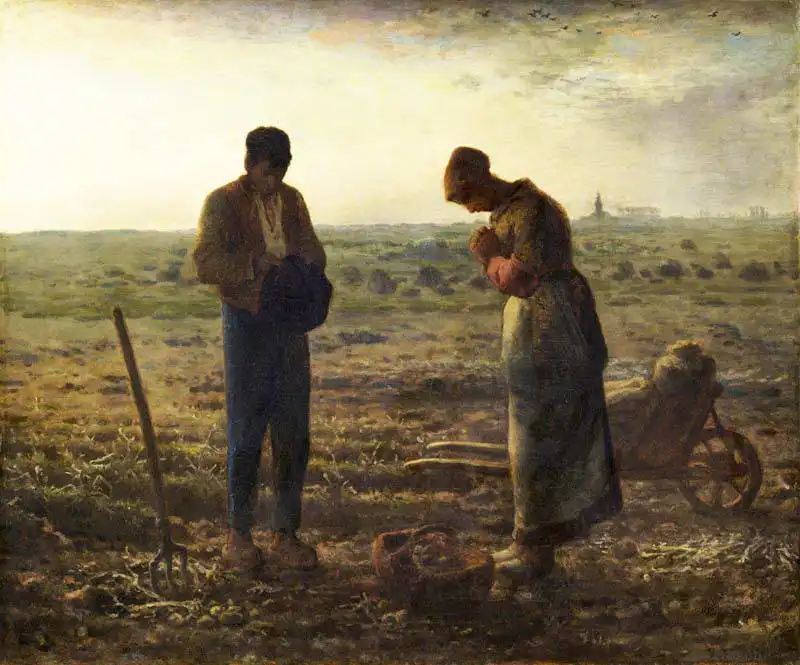
L'immagine è stata ordinata dal milionario americano Thomas G. Appleton e il suo prezzo è poi salito sul cielo (il miglio viveva in grande povertà e spesso ha dovuto prendere in prestito). Le linee delle patate sono illuminate da calde luce sera e l'uomo e la donna hanno interrotto il lavoro per pregare il ginocchio (che probabilmente suona le campane dalla chiesa sullo sfondo). L'immagine è un tributo a duro lavoro umano, pietà, umiltà e rispetto per la natura. L'immagine non ha negato che lo stesso Millet fosse molto bene da una famiglia contadina e una scena simile.

Millet painted picture In ginocchio in 1857. Prevailing color of this fine art print is colori scuri and its shape is paesaggio. Original size is 55.5 x 66. This art piece is located in Musee d'Orsay, Paris, France. This image is printed on demand - you can choose material, size and finishing.

Jean-Francois Millet (1814-1875). At the outset of his career, he refused the stereotyped concept of painting and became a free portrait painter. He influenced Impressionists through his selection of topics: he painted simple people, poor farmers and the humility of hardworking people. He loved the countryside where he lived, devoted a lot of energy for rural people. Millet’s paintings are characterized by an interesting, gold and melancholy light that gives his landscapes a religious character. The Angelus - church bells in the distance strike as two people say a prayer of thanks for the harvest (ironically, the Louvre auctioned this painting for an astronomical sum). Gleaners. The monumentality of characters achieved through simplification of the environment (which was later used by Seurat) is clamped from above by the horizon. The image probably expresses the oppression of peasants (especially women without voting rights) after 1848.

Motif size

Total size: 80 x 67 cm

Material


Finishing


Frame & passepartout

colour of passepartout
none

Selected finishing

Matte paper (print)
Share this settingShare this setting
Print. The image is printed on the top quality 10-ink HP Z9PS printer on HP matte 270 g / m2 paper. You can choose any size to an accuracy of 1 cm. A margin of 5 cm around the image is added to the size of the motif.

ZoomZoom

You can find a detailed description about our finishings here.

:
41 €

Shipping date: 2 days

In ginocchio

ID: #1891 | TOP 100 | Realismo | Persone

Date: 1857
Medium: oil on canvas
Location: Musee d'Orsay, Paris, France
Dimensions: 55.5 x 66

Testo tradotto automaticamente. Per favore, scusa eventuali errori!

L'immagine è stata ordinata dal milionario americano Thomas G. Appleton e il suo prezzo è poi salito sul cielo (il miglio viveva in grande povertà e spesso ha dovuto prendere in prestito). Le linee delle patate sono illuminate da calde luce sera e l'uomo e la donna hanno interrotto il lavoro per pregare il ginocchio (che probabilmente suona le campane dalla chiesa sullo sfondo). L'immagine è un tributo a duro lavoro umano, pietà, umiltà e rispetto per la natura. L'immagine non ha negato che lo stesso Millet fosse molto bene da una famiglia contadina e una scena simile.

Millet painted picture In ginocchio in 1857. Prevailing color of this fine art print is colori scuri and its shape is paesaggio. Original size is 55.5 x 66. This art piece is located in Musee d'Orsay, Paris, France. This image is printed on demand - you can choose material, size and finishing.

Jean-Francois Millet (1814-1875). At the outset of his career, he refused the stereotyped concept of painting and became a free portrait painter. He influenced Impressionists through his selection of topics: he painted simple people, poor farmers and the humility of hardworking people. He loved the countryside where he lived, devoted a lot of energy for rural people. Millet’s paintings are characterized by an interesting, gold and melancholy light that gives his landscapes a religious character. The Angelus - church bells in the distance strike as two people say a prayer of thanks for the harvest (ironically, the Louvre auctioned this painting for an astronomical sum). Gleaners. The monumentality of characters achieved through simplification of the environment (which was later used by Seurat) is clamped from above by the horizon. The image probably expresses the oppression of peasants (especially women without voting rights) after 1848.


How do we make our pictures (detailed view)

Our reviews from Trustpilot.com

Trusted by our customers. Our customers have been satisfied with us for a long time. We appreciate it and thank you for your trust. You can find more reviews and details of our service ratings on Trustpilot.com.


You might like


80 x 67 cm
41 €