Date: 1826 Medium: oil on canvas Location: Yale Center for British Art Dimensions: 50,2 x 60,3
Testo tradotto automaticamente. Per favore scusa eventuali errori!
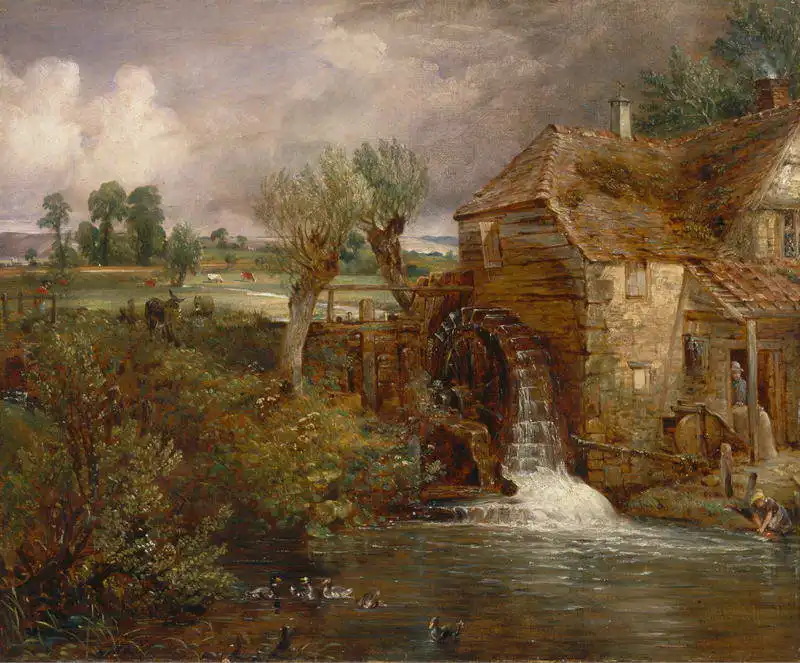
Il padre di John Constabl possedeva diversi mulini a Dedham Valey. Dalla sua giovinezza, gli è stato costantemente istruito come funzionano i mulini, quindi non c'è da meravigliarsi che li abbia catturati nel suo dipinto. Il movimento viene visualizzato per mezzo di luce riflessa in acqua. Inoltre, l'intero paesaggio agricolo dietro il mulino è immerso alla luce solare. Sul lato, tuttavia, è oppresso dalle nuvole tempestose, che hanno sempre affascinato così tanto John. Allo stesso tempo, possiamo notare il rispetto di Constabl per l'uomo sotto forma di un lavanderia e lo stesso Miller e la loro vita armoniosa con la natura.
Constable painted picture Mulino a Parham in 1826. Prevailing color of this fine art print is marrone and its shape is paesaggio. Original size is 50,2 x 60,3. This art piece is located in Yale Center for British Art. This image is printed on demand - you can choose material, size and finishing.
John Constable (1776 - 1837). English painter during Romanticism. He was the son of a miller in Suffolk County and since childhood, he dreamed of becoming one of the best landscape painters of the 19th century. At last, painting really became the sole purpose of his existence. In December 1817, he moved to London with his wife, and there the first of their seven children was born. Children then followed almost invariably each year, but it was very difficult and exhausting to feed such a large family. Landscape painting was not recognized nor a much profitable profession in England in the 19th century. John and Mary worked very hard, which later destroyed their health. Despite this, however, gradually the first significant successes arrived. In 1819, John Constable became an associate member of the Royal Academy of Arts. Two years later, he painted his most famous work Hay Wagon. He exhibited it in London, but he came to fame in 1824 when this image received the gold medal at the Salon in Paris. The local appraisal was full of recognition, but in England his work was viewed with reserve. A year later, although he was accepted as a full member of the Royal Academy of Arts, he exhibited a grim picture, Hadleigh Castle, which expressed grief over the death of his wife. He entrusted their seven children to a nurse, but he still cared for them very well and conscientiously. A very renowned piece is Wivenhoe Park of 1816. In 1833, however, he fell ill and was greatly plagued by old age. To conserve his strength, he painted only less demanding watercolours. Finally, Constable died after a stroke in 1837. His paintings were sold for a small amount auction, and his work achieved recognition many years later.
Trusted by our customers. Our customers have been satisfied with us for a long time. We appreciate it and thank you for your trust. You can find more reviews and details of our service ratings on Trustpilot.com.




 776 273 496

