Date: c. 1478-1480 Medium: tempera Location: National Gallery of Art, Washington, USA Dimensions: 52,6 x 75,6
Testo tradotto automaticamente. Per favore, scusa eventuali errori!
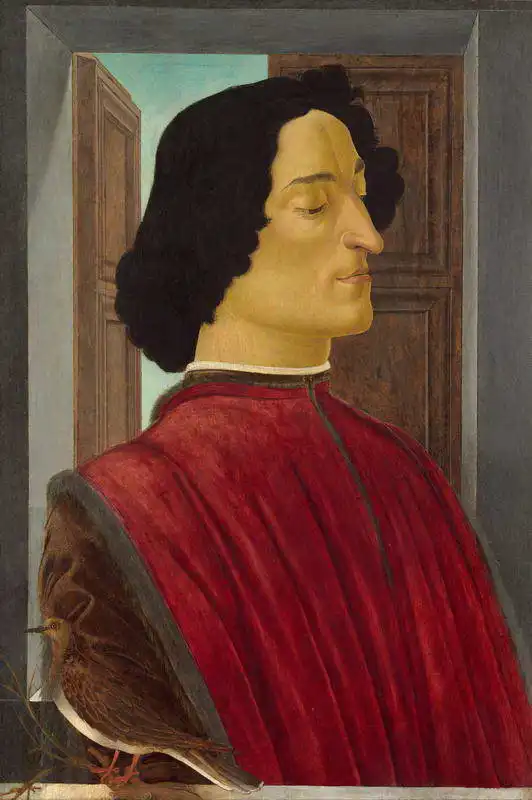
Giuliano Medici, insieme a suo fratello maggiore Lorenzo a Firenze nella seconda metà del XV secolo. Al lancio di Pasqua di Dio, fu assassinato nella Cattedrale fiorentina durante la Santa Messa. Fu pugnalato diciannove dalla spada. Gli assassini erano sostenitori della famiglia DE 'Medic, i così grandi partiti Pazsi. Dopo la violenta morte di Giulian, hanno cercato di conquistare il governo, ma il fratello di Giulian, Lorenzo, è riuscito a difendere la sua posizione. La morte del figlio minore Pier e Lucrezia de 'Medici hanno scioccato l'intera Firenze, e gli è stato ordinato di creare una serie di ritratti del defunto come memoria e allo stesso tempo minaccia a tutti ribelli. L'immagine di Botticelli era un prototipo per altri artisti perché raffigurava Giuliano come icona, quasi santa. La finestra aperta e una triste tartaruga erano il solito simbolo della morte. Questi due simboli dovevano essere la partenza dell'anima e il suo trasferimento all'aldilà. Alcuni critici di arte e scienziati affermano che questa immagine è una fedele rappresentazione del volto del defunto, poiché era basata su una maschera creata dopo la morte sul volto di Giuliano. Concludono sulla base dei coperchi chiusi.
Botticelli painted picture Giuliano de Medici in c. 1478-1480. Prevailing color of this fine art print is varietà di colori and its shape is ritratto. Original size is 52,6 x 75,6. This art piece is located in National Gallery of Art, Washington, USA. This image is printed on demand - you can choose material, size and finishing.
Sandro Botticelli (1445-1510). Also known under the name Alessandro di Mariano di Vanni Filipepi. Botticelli was an Italian Renaissance painter from the Florentine school. His work belongs to the best in the early Renaissance. Botticelli took his surname allegedly from his brother’s nickname (who was as rotund as a tub – botticelli). His artistic career likely began in the goldsmith’s workshop of his brother Antonio. Botticelli was later entrusted by his family to the care of Filippo Lippi, a renowned painter and knowledgeable monk. As a renowned artist, Botticelli gained friends and benefactors from the most important Florentine families. He worked mainly for the Medici family. In 1481, together with another major Florentine painter, Domenico Ghirlandaio, Botticelli was summoned to Rome to participate in the decoration of the Sistine Chapel. In 1491, they were both appointed to a jury that was to decide on the contract for the construction of the facade of Florence cathedral. At the end of his life, he evidently worked under the influence of Savonarol’s fiery sermons, exclusively painting Christian themes. Among his most famous works are The Birth of Venus and Spring (Primavera) . Botticelli never married – he reportedly struggled with unrequited love for Simonet Vespucci, who was to be the model for his Venus. As his dying wish, he desired to be buried at her feet. His wish was fulfilled.
Trusted by our customers. Our customers have been satisfied with us for a long time. We appreciate it and thank you for your trust. You can find more reviews and details of our service ratings on Trustpilot.com.




 776 273 496
