Date: 1503-1515 Medium: oil on board Location: Museo del Prado v Madridu Dimensions: 380 x 220
Testo tradotto automaticamente. Per favore, scusa eventuali errori!
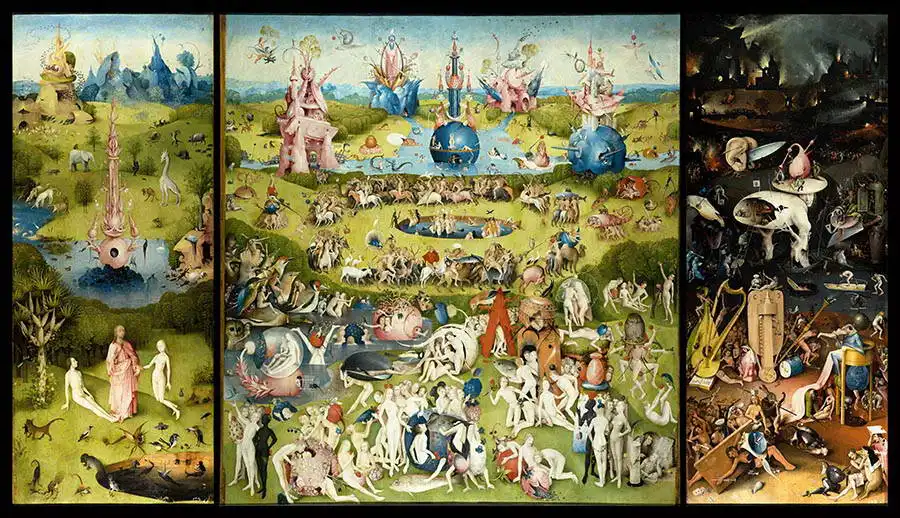
Triptych dovrebbe probabilmente essere letto cronologicamente. La parte sinistra dell'immagine è la creazione del mondo e Adamo ed Eva. La parte centrale dell'immagine con i suoi riferimenti al piacere terreno è un tributo alla vita, all'amore, al piacere e alla libertà. È un'esplosione di vitalità ed euforia, che porta agli inferi ... (la terza parte dell'immagine). Il simbolismo dell'immagine è semplice: Dio ha creato un mondo che era pulito e che le persone abitano rapidamente. Tuttavia, le persone sono state sfrattate e il mondo si è trasformato in un peccato e peccato. Questo porta a una punizione inevitabile. Il dipinto dell'immagine è sovraffollato di personaggi di diverse aree della vita, in un numero infinito di atteggiamenti e attività. Tutto è integrato da animali immaginari, vari esseri e piante fantasy. Alcuni esseri umani sono raffigurati nell'immagine come vermi che stanno perforando con frutti giganti che rappresentano il mondo. In questo design, rispetta le proporzioni del motivo originale (quindi è necessario il bordo nero, che bilancia i bordi irregolari dell'originale). Una versione leggermente tagliata, senza un supporto nero può essere trovata qui. Questa versione è considerata più adatta per la stampa su una tela allungata.
Bosch painted picture Il giardino delle delizie terrestri in 1503-1515. Prevailing color of this fine art print is varietà di colori and its shape is oblungo. Original size is 380 x 220. This art piece is located in Museo del Prado v Madridu. This image is printed on demand - you can choose material, size and finishing.
Hieronymus Bosch (1450 -1516). Dutch painter whose real name is Jheronimus van Aken (his name is derived from the city s-Hertogenbosch). He came from a family of painters - his grandfather and uncles were all painters. Much of his work is devoted to sin and human moral failure. Bosch painted demons, half-human creatures, to evoke fear and unearth the evil hidden in man. He became famous mainly for his triptychs (the most famous is the Garden of Earthly Delights. He was the first who created and worked with the world of dreams, fantasy creatures, nightmares and fears, as a response to former medieval religious ideas (about deadly sins, a naturally sinful humanity, hell and eternal damnation).
Trusted by our customers. Our customers have been satisfied with us for a long time. We appreciate it and thank you for your trust. You can find more reviews and details of our service ratings on Trustpilot.com.




 776 273 496
