Craftfineart.com
Search
fr
Oblíbené položky
Košík
NOTRE REMISE D'ÉTÉ A ÉCLATÉ,
UTILISEZ LE CODE sale10
×
Nos propositions de conception:
simplicité
élégance
moderne
vintage
classique


Trest

ID: #6363 | Le réalisme | Personnes

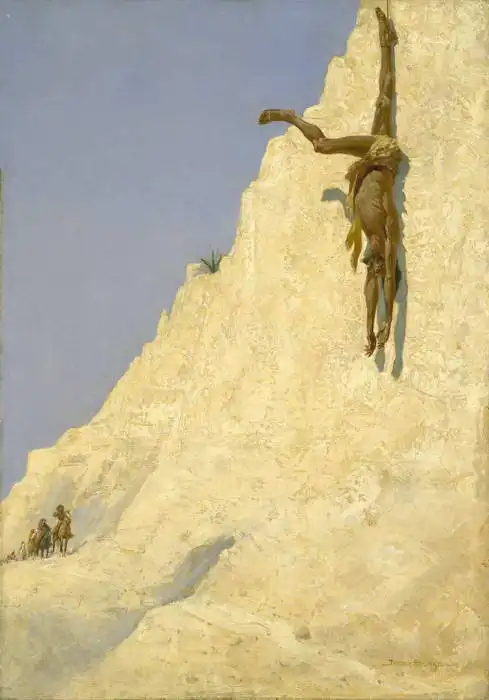
Le tableau représente un cheval suspendu à l'envers sur la pente abrupte d'une falaise sablonneuse. Son corps est tendu et ses jambes pointent vers le haut, ce qui suggère qu'il est tombé et qu'il est maintenant suspendu dans une position dangereuse. Au pied de la falaise, deux petits personnages le regardent. Les couleurs vives et la texture détaillée de la falaise ajoutent à l'effet dramatique de la scène.

Ce texte et les mots-clés ont été générés par une intelligence artificielle, merci de votre compréhension !


Prevailing color of this fine art print is vif and its shape is portrait. This image is printed on demand - you can choose material, size and finishing.

Frederick Sackrider Remington (1861-1909) was an American painter and illustrator representing the artistic direction of Realism, with which he captured the old American West. He was born in New York to a family of a colonel and active Republican. The history of his family is rich and its roots go deep: George Catlin, a painter of American Indians and collector of their artefacts, was his blood ancestor. Frederic was a cousin of Eliphalet Remington, founder of the oldest gunsmith in America - Remington Arms Company. From Werner’s side, he was also related to George Washington himself. For four years, Frederic moved with his father in a military environment. He was not a good student, which worried his father as he had ambitions to send his son to West Point. At age 11, he went to military school. Remington was more of a dreamer and never planned to work hard. He painted caricatures of his classmates and later sketches of soldiers. He never finished art school. He went to Montana, where he spent some time as a Watcher of Horses, farmer and hunter. He focused on commercial reproduction at Harpers Weekly. Although his drawings were successful, he never gained recognition like the leaders of the field Winslow Homer and Eastman Johnson. The turning point came with his first colour oil painting the Return of the Blackfoot, displayed in the National Gallery of Design. Army officers invited him to capture their engaging and often incredible stories. From tales, he painted Indians Playing Bison or the cruel Indian Punishment. Thus, he captured fateful moments of American history. In 1888, two of his paintings were used on postage stamps. During old age, Frederic threw himself into novels writing, which he adorned wi

Motif size

Total size: 56 x 80 cm

Material


Finishing


Frame & passepartout

colour of passepartout
none

Selected finishing

Matte paper (print)
Share this settingShare this setting
Print. The image is printed on the top quality 9-ink HP Z9PS printer on Fomei Cotton Smoooth g / m2 paper. You can choose any size to an accuracy of 1 cm. A margin of 5 cm around the image is added to the size of the motif.

ZoomZoom

You can find a detailed description about our finishings here.

:
38 €

Shipping date: 2 days

Trest

ID: #6363 | Le réalisme | Personnes

Le tableau représente un cheval suspendu à l'envers sur la pente abrupte d'une falaise sablonneuse. Son corps est tendu et ses jambes pointent vers le haut, ce qui suggère qu'il est tombé et qu'il est maintenant suspendu dans une position dangereuse. Au pied de la falaise, deux petits personnages le regardent. Les couleurs vives et la texture détaillée de la falaise ajoutent à l'effet dramatique de la scène.

Ce texte et les mots-clés ont été générés par une intelligence artificielle, merci de votre compréhension !


Prevailing color of this fine art print is vif and its shape is portrait. This image is printed on demand - you can choose material, size and finishing.

Frederick Sackrider Remington (1861-1909) was an American painter and illustrator representing the artistic direction of Realism, with which he captured the old American West. He was born in New York to a family of a colonel and active Republican. The history of his family is rich and its roots go deep: George Catlin, a painter of American Indians and collector of their artefacts, was his blood ancestor. Frederic was a cousin of Eliphalet Remington, founder of the oldest gunsmith in America - Remington Arms Company. From Werner’s side, he was also related to George Washington himself. For four years, Frederic moved with his father in a military environment. He was not a good student, which worried his father as he had ambitions to send his son to West Point. At age 11, he went to military school. Remington was more of a dreamer and never planned to work hard. He painted caricatures of his classmates and later sketches of soldiers. He never finished art school. He went to Montana, where he spent some time as a Watcher of Horses, farmer and hunter. He focused on commercial reproduction at Harpers Weekly. Although his drawings were successful, he never gained recognition like the leaders of the field Winslow Homer and Eastman Johnson. The turning point came with his first colour oil painting the Return of the Blackfoot, displayed in the National Gallery of Design. Army officers invited him to capture their engaging and often incredible stories. From tales, he painted Indians Playing Bison or the cruel Indian Punishment. Thus, he captured fateful moments of American history. In 1888, two of his paintings were used on postage stamps. During old age, Frederic threw himself into novels writing, which he adorned wi


How do we make our pictures (detailed view)

Our reviews from Trustpilot.com

Trusted by our customers. Our customers have been satisfied with us for a long time. We appreciate it and thank you for your trust. You can find more reviews and details of our service ratings on Trustpilot.com.


You might like


56 x 80 cm
38 €