Craftfineart.com
Search
fr
Oblíbené položky
Košík
NOTRE REMISE D'ÉTÉ A ÉCLATÉ,
UTILISEZ LE CODE sale10
×
Nos propositions de conception:
simplicité
élégance
moderne
vintage
classique


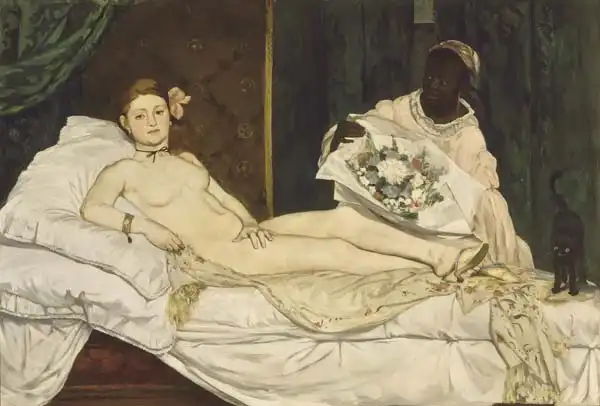
Olympie

ID: #1877 | Impressionnisme | Nu

Date: 1863
Medium: oil on canvas
Location: Musee d'Orsay, Paris, France
Dimensions: 103.5 x 190

Texte traduit automatiquement. Veuillez excuser toutes les erreurs!

L'image de Manet a fait un gros agitation à Paris en 1865. Le nom fait référence à la mythologie ancienne, mais le concept était très contemporain, qui à l'époque n'était pas coutumier (nudité couverte d'éléments anciens, de mythologie, de décoration d'image, etc.). De plus, c'était sans aucun doute une prostituée, ce qui était très provocateur. L'expression a un provocateur et sinon hostile (sur le site des sourires traditionnels unyber) et regarde directement dans l'œil du spectateur. De plus, Kurtizan obtient juste des fleurs de l'un des clients.

Manet painted picture Olympie in 1863. Prevailing color of this fine art print is noir et blanc and its shape is paysage. Original size is 103.5 x 190. This art piece is located in Musee d'Orsay, Paris, France. This image is printed on demand - you can choose material, size and finishing.

Édouard Manet (1832-1883). French Impressionist painter. He perhaps had the misfortune of starting at a time when the pendulum of history was deviating from traditional academic painting and Impressionism: for his generational peers, he was too progressive and for young painters, he was too traditional. Manet had an innovative spirit that, during his study of old masters (such as Diego Velázquez), he complemented with an excellent painting technique. From the Impressionists, he took a penchant for displaying reality using long expressive brush strokes, studying objects in the open air, and concentrating on working with light and colour. Unlike the Impressionists, however, he did not give up black colours, contours and classical composition. In fact, he did not even want to be associated with the Impressionists – he wanted his paintings to be included independently in Salon exhibitions and avoided the label of Impressionism.

Motif size

Total size: 80 x 54 cm

Material


Finishing


Frame & passepartout

colour of passepartout
none

Selected finishing

Matte paper (print)
Share this settingShare this setting
Print. The image is printed on the top quality 10-ink HP Z9PS printer on HP matte 270 g / m2 paper. You can choose any size to an accuracy of 1 cm. A margin of 5 cm around the image is added to the size of the motif.

ZoomZoom

You can find a detailed description about our finishings here.

:
38 €

Shipping date: 2 days

Olympie

ID: #1877 | Impressionnisme | Nu

Date: 1863
Medium: oil on canvas
Location: Musee d'Orsay, Paris, France
Dimensions: 103.5 x 190

Texte traduit automatiquement. Veuillez excuser toutes les erreurs!

L'image de Manet a fait un gros agitation à Paris en 1865. Le nom fait référence à la mythologie ancienne, mais le concept était très contemporain, qui à l'époque n'était pas coutumier (nudité couverte d'éléments anciens, de mythologie, de décoration d'image, etc.). De plus, c'était sans aucun doute une prostituée, ce qui était très provocateur. L'expression a un provocateur et sinon hostile (sur le site des sourires traditionnels unyber) et regarde directement dans l'œil du spectateur. De plus, Kurtizan obtient juste des fleurs de l'un des clients.

Manet painted picture Olympie in 1863. Prevailing color of this fine art print is noir et blanc and its shape is paysage. Original size is 103.5 x 190. This art piece is located in Musee d'Orsay, Paris, France. This image is printed on demand - you can choose material, size and finishing.

Édouard Manet (1832-1883). French Impressionist painter. He perhaps had the misfortune of starting at a time when the pendulum of history was deviating from traditional academic painting and Impressionism: for his generational peers, he was too progressive and for young painters, he was too traditional. Manet had an innovative spirit that, during his study of old masters (such as Diego Velázquez), he complemented with an excellent painting technique. From the Impressionists, he took a penchant for displaying reality using long expressive brush strokes, studying objects in the open air, and concentrating on working with light and colour. Unlike the Impressionists, however, he did not give up black colours, contours and classical composition. In fact, he did not even want to be associated with the Impressionists – he wanted his paintings to be included independently in Salon exhibitions and avoided the label of Impressionism.


How do we make our pictures (detailed view)

Our reviews from Trustpilot.com

Trusted by our customers. Our customers have been satisfied with us for a long time. We appreciate it and thank you for your trust. You can find more reviews and details of our service ratings on Trustpilot.com.


You might like


80 x 54 cm
38 €