Craftfineart.com
Search
fr
Oblíbené položky
Košík
NOTRE REMISE D'ÉTÉ A ÉCLATÉ,
UTILISEZ LE CODE sale10

Buste de bébé

Paul Klee

Nos propositions de conception:
simplicité
élégance
moderne
vintage
classique


Buste de bébé

ID: #1753 | Expresionnisme | Abstrait

Date: 1933
Medium: watercolours, paper
Location: Zentrum Paul Klee, Bern, Switzerland
Dimensions: 50.8 x 50.8

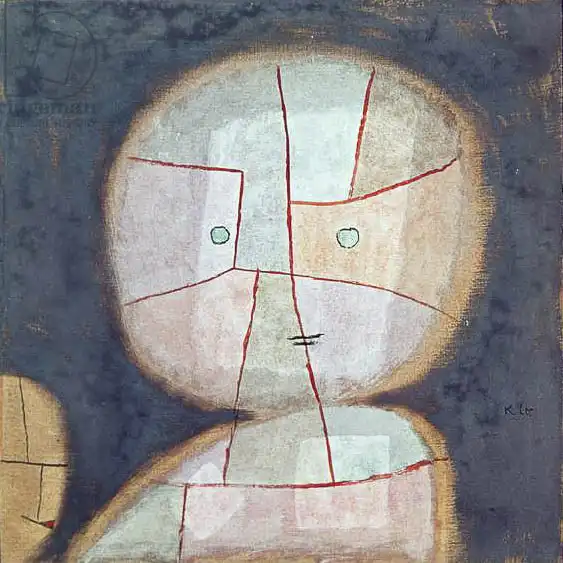
Cette peinture est une œuvre d'art abstraite représentant une composition figurative stylisée. La partie dominante de la toile est une tête de forme ovale et large et un visage simple divisé par des lignes rouges qui créent l'illusion de caractéristiques faciales telles que les yeux, le nez et la bouche. L'expression générale est minimaliste et laisse place à de nombreuses interprétations. Les couleurs utilisées sont sourdes, à l'exception des lignes rouges audacieuses.

Ce texte et les mots-clés ont été générés par une intelligence artificielle, merci de votre compréhension !


Klee painted picture Buste de bébé in 1933. Prevailing color of this fine art print is vif and its shape is carré. Original size is 50.8 x 50.8. This art piece is located in Zentrum Paul Klee, Bern, Switzerland. This image is printed on demand - you can choose material, size and finishing.

Paul Klee (1879-1940). From childhood, he was interested in both music and painting, but as is evident, finally decided on painting - his paintings are among prized artworks. In Munich, he met Kandinsky, Franz Marc, and other artists of the then avant-garde. He met also his future wife, pianist Lily Stumpf. His work is associated with a expressionism, cubism, and surrealism. He was one of the four Die Blaue Vier (with Kandinsky, Feininger and Jawlensky). He taught at Bauhaus and the Düsseldorf Academy until 1933, when the Nazis declared his paintings a figment of a sick soul and with labelled his whole creation as degenerate art. Klee was extremely hardworking and after his death, he left behind 8926 works in Switzerland. Klee’s paintings are fragile, with a sensitive use of color (his colour mixing ranks among the world’s best) and frequent references to poetry, music and dreams.

Buste de bébé

Paul Klee

Motif size

Total size: 79 x 80 cm

Material


Finishing


Frame & passepartout

colour of passepartout
none

Selected finishing

Matte paper (print)
Share this settingShare this setting
Print. The image is printed on the top quality 9-ink HP Z9PS printer on Fomei Cotton Smoooth g / m2 paper. You can choose any size to an accuracy of 1 cm. A margin of 5 cm around the image is added to the size of the motif.

ZoomZoom

You can find a detailed description about our finishings here.

:
44 €

Shipping date: 2 days

Buste de bébé

ID: #1753 | Expresionnisme | Abstrait

Date: 1933
Medium: watercolours, paper
Location: Zentrum Paul Klee, Bern, Switzerland
Dimensions: 50.8 x 50.8

Cette peinture est une œuvre d'art abstraite représentant une composition figurative stylisée. La partie dominante de la toile est une tête de forme ovale et large et un visage simple divisé par des lignes rouges qui créent l'illusion de caractéristiques faciales telles que les yeux, le nez et la bouche. L'expression générale est minimaliste et laisse place à de nombreuses interprétations. Les couleurs utilisées sont sourdes, à l'exception des lignes rouges audacieuses.

Ce texte et les mots-clés ont été générés par une intelligence artificielle, merci de votre compréhension !


Klee painted picture Buste de bébé in 1933. Prevailing color of this fine art print is vif and its shape is carré. Original size is 50.8 x 50.8. This art piece is located in Zentrum Paul Klee, Bern, Switzerland. This image is printed on demand - you can choose material, size and finishing.

Paul Klee (1879-1940). From childhood, he was interested in both music and painting, but as is evident, finally decided on painting - his paintings are among prized artworks. In Munich, he met Kandinsky, Franz Marc, and other artists of the then avant-garde. He met also his future wife, pianist Lily Stumpf. His work is associated with a expressionism, cubism, and surrealism. He was one of the four Die Blaue Vier (with Kandinsky, Feininger and Jawlensky). He taught at Bauhaus and the Düsseldorf Academy until 1933, when the Nazis declared his paintings a figment of a sick soul and with labelled his whole creation as degenerate art. Klee was extremely hardworking and after his death, he left behind 8926 works in Switzerland. Klee’s paintings are fragile, with a sensitive use of color (his colour mixing ranks among the world’s best) and frequent references to poetry, music and dreams.


How do we make our pictures (detailed view)

Our reviews from Trustpilot.com

Trusted by our customers. Our customers have been satisfied with us for a long time. We appreciate it and thank you for your trust. You can find more reviews and details of our service ratings on Trustpilot.com.

You might like


79 x 80 cm
44 €