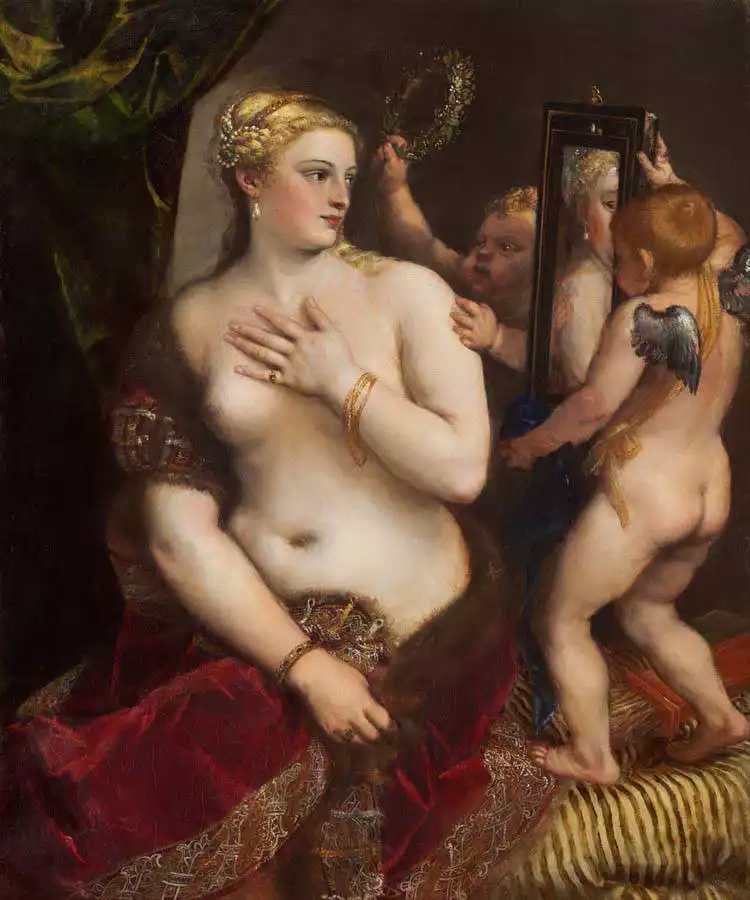
Date: 1555 Medium: oil on canvas Location: National Gallery of Art, Washington DC, USA Dimensions: 105,5 x 124,5
Texto traducido automáticamente. ¡Disculpe los errores!
El motivo principal del arte renacentista fue la retroalimentación del pasado clásico: en Venus con un espejo, Tizian reveló su admiración de la antigüedad y su estilo moderno distintivo. Durante su estadía en Roma, escribió que estaba aprendiendo de las increíbles piedras antiguas, que en ese momento se desenterraban todos los días. De hecho, el tiziano incluso estableció un gesto de su diosa (palma de una mano en su pecho y la otra mano en su regazo) en la famosa estatua romana de Venus. A pesar de la inspiración de la estatua histórica, el pintor Venus logró respirar calidez y vida y crear una asombrosa diosa moderna. Una mujer hermosa que miraba en el espejo era un tema favorito de la poesía de amor renacentista en la que los poetas expresan su envidia hacia un espejo feliz que puede pertenecer al magnífico reflejo de la mujer.
Tizian painted picture Venus con espejo in 1555. Prevailing color of this fine art print is marrón and its shape is retrato. Original size is 105,5 x 124,5. This art piece is located in National Gallery of Art, Washington DC, USA. This image is printed on demand - you can choose material, size and finishing.
Full name Tiziano Vecelli Da Cadore (1485-1576)He came from a family of lawyers and notaries. At nine years of age, he left to study in the contemporary centre of art: Venice. There, he met with not only Leonardo da Vinci and Albrecht Dürer. Tizian’s uncle promoted and developed his talent, until one day the young artist was admitted to the workshop of Giovanni Bellini. His name worked its way into the minds of potential customers. When his master died, he became the main Venetian painter. His customers were Venetian Doges, for whom he not only painted portraits (Jacopo Strada). Tizian’s paintings have become a symbol of luxury and wealth. After the coronation of Emperor Charles V, he was awarded a knighthood. In 1542, at the request of Pope Paul III, he moved to Rome, where he replaced Michelangelo. Tizian laid the foundations for the Renaissance and inspired artists, such as Rembrandt and Rubens.
Trusted by our customers. Our customers have been satisfied with us for a long time. We appreciate it and thank you for your trust. You can find more reviews and details of our service ratings on Trustpilot.com.




 776 273 496
