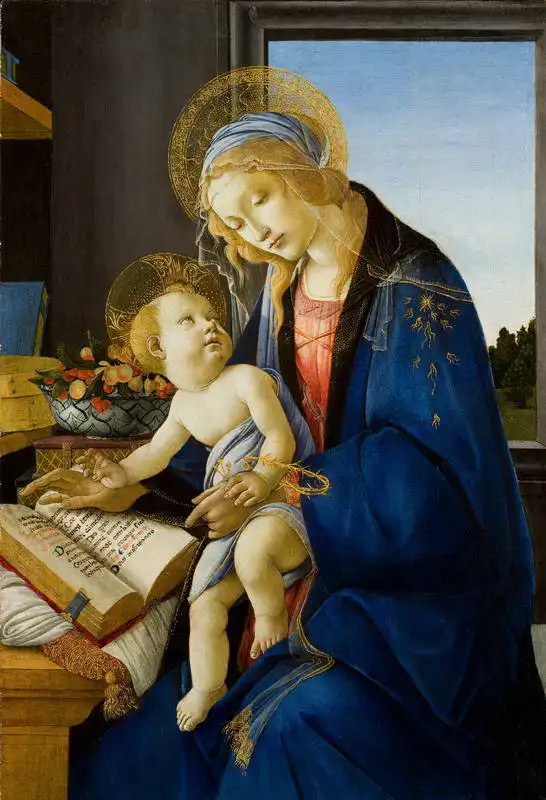
Madonna con un libro o una virgen con un niño es una pequeña imagen de la artista renacentista italiana Sandra Botticelli. Es un trabajo muy fino y elegante en el que María y el niño están sentados junto a la ventana en la esquina de la habitación. La mano derecha toca el reloj del reloj, libros de oración con oraciones repetidas regularmente para diferentes tiempos diarios, que era común en los siglos XIII a XVI. El niño niega la visión de la madre que se enfoca en leer oraciones. Las manos de los dos personajes tienen su simbolismo, la madre y la niña tienen una mano derecha en un toque de bendición, la mano izquierda está cerrada. El niño que representa a Cristo en su mano izquierda cierra tres uñas de la cruz y tiene una corona de espina alrededor de su muñeca: los expertos dicen que estos dos detalles se completaron solo después de que se completara toda la imagen, probablemente para enfatizar el mensaje de que se suponía que la imagen debía traer. La capa azul de María, con la que se describe muy a menudo, debería simbolizar su pureza y posición real.
Botticelli painted picture Madonna con un libro in c. 1480. Prevailing color of this fine art print is azul and its shape is retrato. Original size is 39,5 x 58. This art piece is located in Museo Poldi Pezzoli, Milano. This image is printed on demand - you can choose material, size and finishing.
Sandro Botticelli (1445-1510). Also known under the name Alessandro di Mariano di Vanni Filipepi. Botticelli was an Italian Renaissance painter from the Florentine school. His work belongs to the best in the early Renaissance. Botticelli took his surname allegedly from his brother’s nickname (who was as rotund as a tub – botticelli). His artistic career likely began in the goldsmith’s workshop of his brother Antonio. Botticelli was later entrusted by his family to the care of Filippo Lippi, a renowned painter and knowledgeable monk. As a renowned artist, Botticelli gained friends and benefactors from the most important Florentine families. He worked mainly for the Medici family. In 1481, together with another major Florentine painter, Domenico Ghirlandaio, Botticelli was summoned to Rome to participate in the decoration of the Sistine Chapel. In 1491, they were both appointed to a jury that was to decide on the contract for the construction of the facade of Florence cathedral. At the end of his life, he evidently worked under the influence of Savonarol’s fiery sermons, exclusively painting Christian themes. Among his most famous works are The Birth of Venus and Spring (Primavera) . Botticelli never married – he reportedly struggled with unrequited love for Simonet Vespucci, who was to be the model for his Venus. As his dying wish, he desired to be buried at her feet. His wish was fulfilled.
Trusted by our customers. Our customers have been satisfied with us for a long time. We appreciate it and thank you for your trust. You can find more reviews and details of our service ratings on Trustpilot.com.




 776 273 496
