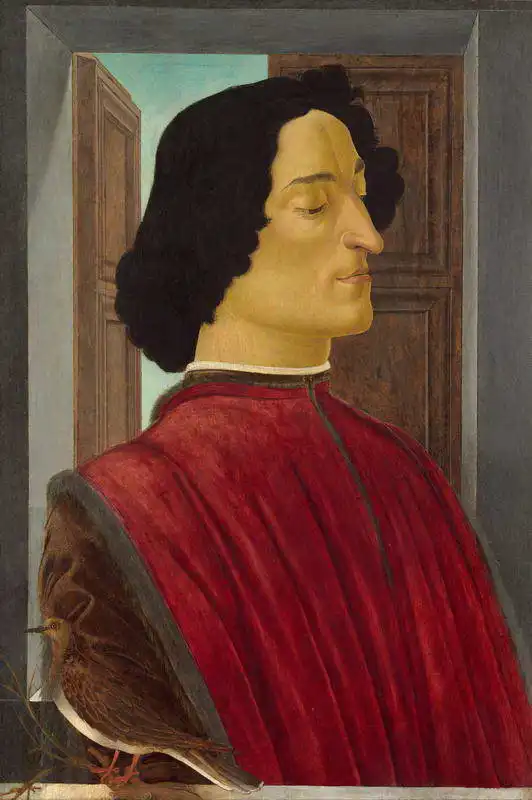
Date: c. 1478-1480 Medium: tempera Location: National Gallery of Art, Washington, USA Dimensions: 52,6 x 75,6
Texto traducido automáticamente. ¡Disculpe los errores!
Giuliano Medici, junto con su hermano mayor Lorenzo en Florencia en la segunda mitad del siglo XV. En el lanzamiento de Pascua de Dios, fue asesinado en la Catedral Florentina durante la Santa Misa. Sword lo apuñaló a diecinueve. Los asesinos fueron partidarios de la familia De 'Medic, los partizanos pazsi llamados así. Después de la violenta muerte de Giulian, intentaron hacerse cargo del gobierno, pero el hermano de Giulian, Lorenzo, logró defender su posición. La muerte del hijo menor Pier y Lucrezia de 'Medici sorprendieron a toda la Florencia, y se le ordenó crear una serie de retratos del difunto como un recuerdo y al mismo tiempo amenaza para todos los rebeldes. La imagen de Botticelli era un prototipo para otros artistas porque representaba a Giulian como un ícono, casi santo. La ventana abierta y una triste tortuga era el símbolo habitual de muerte. Se suponía que estos dos símbolos eran la partida del alma y su transferencia al más allá. Algunos críticos del arte y los científicos afirman que esta imagen es una representación fiel de la cara del difunto, ya que se basó en una máscara creada después de la muerte en la cara de Giulian. Concluyen sobre la base de las tapas cerradas.
Botticelli painted picture Giuliano de Medici in c. 1478-1480. Prevailing color of this fine art print is vívido and its shape is retrato. Original size is 52,6 x 75,6. This art piece is located in National Gallery of Art, Washington, USA. This image is printed on demand - you can choose material, size and finishing.
Sandro Botticelli (1445-1510). Also known under the name Alessandro di Mariano di Vanni Filipepi. Botticelli was an Italian Renaissance painter from the Florentine school. His work belongs to the best in the early Renaissance. Botticelli took his surname allegedly from his brother’s nickname (who was as rotund as a tub – botticelli). His artistic career likely began in the goldsmith’s workshop of his brother Antonio. Botticelli was later entrusted by his family to the care of Filippo Lippi, a renowned painter and knowledgeable monk. As a renowned artist, Botticelli gained friends and benefactors from the most important Florentine families. He worked mainly for the Medici family. In 1481, together with another major Florentine painter, Domenico Ghirlandaio, Botticelli was summoned to Rome to participate in the decoration of the Sistine Chapel. In 1491, they were both appointed to a jury that was to decide on the contract for the construction of the facade of Florence cathedral. At the end of his life, he evidently worked under the influence of Savonarol’s fiery sermons, exclusively painting Christian themes. Among his most famous works are The Birth of Venus and Spring (Primavera) . Botticelli never married – he reportedly struggled with unrequited love for Simonet Vespucci, who was to be the model for his Venus. As his dying wish, he desired to be buried at her feet. His wish was fulfilled.
Trusted by our customers. Our customers have been satisfied with us for a long time. We appreciate it and thank you for your trust. You can find more reviews and details of our service ratings on Trustpilot.com.




 776 273 496
