Date: 1888 Medium: oil on canvas Location: Neue Pinakothek, Munich, Německo Dimensions: 91 x 72
Automatisch übersetzter Text. Bitte entschuldigen Sie alle Fehler!
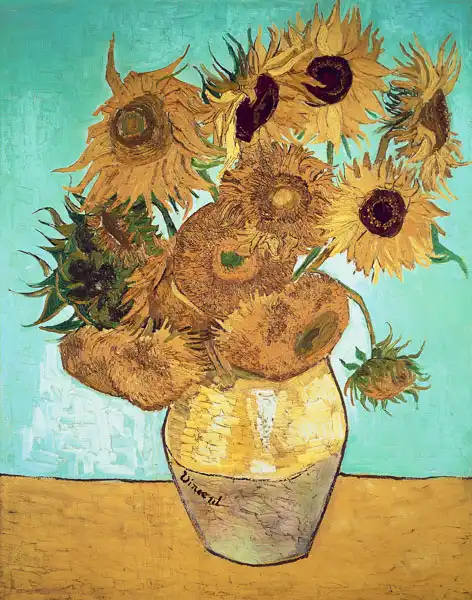
Die erste Serie im Jahr 1887, in der er die entspannten Blumen von Sonnenblumen eroberte (siehe Beispiel einer solchen Sonnenblume). In der zweiten Serie von 1888 von Arles malte er die Sonnenblume in das Gewicht. Diese Serie war mit Paul Gauguin verbunden, weil sie Teil der Dekoration seines Gastwirtraums in Arles waren. Die ersten beiden Varianten des Bildes waren dunkel und nur die dritte und vierte erhielten eine typische gelbe Farbe (einmal mit blauem Green und der zweiten mit einem gelben Hintergrund). Um die Sache noch schlimmer zu machen, malte Gogh 1889 eine andere Version oder vielmehr Kopien von Sonnenblumen aus der zweiten Serie. Für Gogha war die gelbe Farbe der Sonnenblumen Glück und Optimismus und betrachtete ihre Gemälde als eine große Herausforderung (nicht jeder findet eine solche Hitze, um dieses Gold und diese Töne dieser Blumen zu schmelzen. Es erfordert die Energie und Konzentration des gesamten Wesens). Dieses Bild ist die dritte Version der zweiten Serie.
Gogh painted picture Sonnenblume in 1888. Prevailing color of this fine art print is gelb and its shape is porträt. Original size is 91 x 72. This art piece is located in Neue Pinakothek, Munich, Německo. This image is printed on demand - you can choose material, size and finishing.
Vincent Willem van Gogh (1853-1890). Dutch painter belonging to Post-Impressionism. His paintings (some 900 paintings and 1,100 drawings and sketches) are among the most famous in the world and are sold for exorbitant sums (except for those in our shop). Parisian Impressionists He lived in Paris from 1886 and was influenced by the use of bright colours - most of his works were painted during this period. In his paintings, Gogh uses contrasting colours (often blue and orange - he said that I want to use colours other contrasts to each of them shone even more to contrast a man and a woman). He was known for his excesses and amputated an ear after the break-up of his friendship with Gauguin. There is a lot of speculation about this incident (he possibly suffered from heavy metal poisoning from paint that had caused mental problems). In 1890, unfortunately he committed suicide.
Trusted by our customers. Our customers have been satisfied with us for a long time. We appreciate it and thank you for your trust. You can find more reviews and details of our service ratings on Trustpilot.com.




 776 273 496
