Craftfineart.com
Search
de
Oblíbené položky
Košík
UNSER SOMMERRABATT IST AUFGETAUCHT,
VERWENDEN SIE DEN CODE sale10

Portugiesin

Robert Delaunay

×
Unsere Gestaltungsvorschläge:
einfachheit
eleganz
modern
vintage
klassisch


Portugiesin

ID: #13503 | Kubismus | Abstrakt

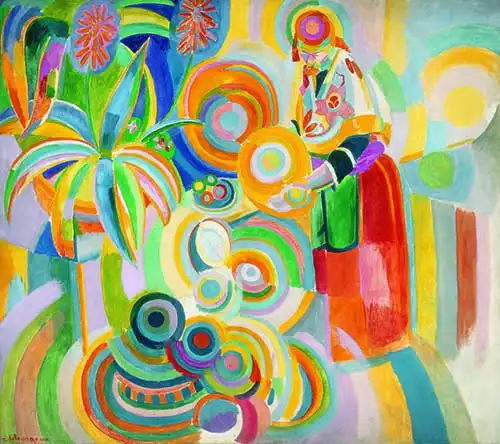
Das Bild zeigt ein abstraktes Gemälde mit hellen und lebhaften Farben. Das Werk besteht aus verschiedenen Formen und Mustern, darunter Kreise, Wellen und florale Motive, die zusammen eine dynamische und farbenfrohe Komposition bilden. Beim Betrachten spürt man eine Mischung aus Freude und Energie, die von dem Gemälde ausgeht. Die Farben reichen von warmen Rot- und Orangetönen bis hin zu kühlen Blau- und Grüntönen, wobei alle Schattierungen sehr satt und kräftig sind.

Dieser Text und die Schlüsselwörter wurden von einer künstlichen Intelligenz erstellt, bitte haben Sie Verständnis!


Prevailing color of this fine art print is lebendig and its shape is landschaft. This image is printed on demand - you can choose material, size and finishing.

Robert Delaunay (1885-1941) was a French Cubist painter. He grew up with his uncle, who saw it him a nascent talent for painting. At 17, he enabled Delaunay to work in the studio of a theatrical backdrop designer. Four years later, he went to Brittany, where he met Henri Rousseau. In 1908, he served one year as a librarian in the army. His images, such as Lune no. 1, had a touch of abstraction with an emphasis on colour and illumination. Incidentally, he became an inspiration for Paul Klee. In 1912, he took part in his first major exhibition, where he received positive criticism. The Eiffel Tower motif is reflected in many of his paintings ( La Ville de Paris). During the war, he stayed with his wife in Portugal. He returned to Paris in 1921, and founded the Orphism art group, named after the Greek poet and the hero. The group’s goal was to work with rhythmic colour theory in combination with movement. Due to the growing threat from Nazi Germany, he went to the Auvergne. His health condition was very bad, he was suffering from cancer, and the move cost him much strength. He died at the age of 56 and is now buried at the cemetery in Gambais.

Portugiesin

Robert Delaunay

Motif size

Total size: 80 x 71 cm

Material


Finishing


Frame & passepartout

colour of passepartout
none

Selected finishing

Matte paper (print)
Share this settingShare this setting
Print. The image is printed on the top quality 10-ink HP Z9PS printer on HP matte 270 g / m2 paper. You can choose any size to an accuracy of 1 cm. A margin of 5 cm around the image is added to the size of the motif.

ZoomZoom

You can find a detailed description about our finishings here.

:
42 €

Shipping date: 2 days

Portugiesin

ID: #13503 | Kubismus | Abstrakt

Das Bild zeigt ein abstraktes Gemälde mit hellen und lebhaften Farben. Das Werk besteht aus verschiedenen Formen und Mustern, darunter Kreise, Wellen und florale Motive, die zusammen eine dynamische und farbenfrohe Komposition bilden. Beim Betrachten spürt man eine Mischung aus Freude und Energie, die von dem Gemälde ausgeht. Die Farben reichen von warmen Rot- und Orangetönen bis hin zu kühlen Blau- und Grüntönen, wobei alle Schattierungen sehr satt und kräftig sind.

Dieser Text und die Schlüsselwörter wurden von einer künstlichen Intelligenz erstellt, bitte haben Sie Verständnis!


Prevailing color of this fine art print is lebendig and its shape is landschaft. This image is printed on demand - you can choose material, size and finishing.

Robert Delaunay (1885-1941) was a French Cubist painter. He grew up with his uncle, who saw it him a nascent talent for painting. At 17, he enabled Delaunay to work in the studio of a theatrical backdrop designer. Four years later, he went to Brittany, where he met Henri Rousseau. In 1908, he served one year as a librarian in the army. His images, such as Lune no. 1, had a touch of abstraction with an emphasis on colour and illumination. Incidentally, he became an inspiration for Paul Klee. In 1912, he took part in his first major exhibition, where he received positive criticism. The Eiffel Tower motif is reflected in many of his paintings ( La Ville de Paris). During the war, he stayed with his wife in Portugal. He returned to Paris in 1921, and founded the Orphism art group, named after the Greek poet and the hero. The group’s goal was to work with rhythmic colour theory in combination with movement. Due to the growing threat from Nazi Germany, he went to the Auvergne. His health condition was very bad, he was suffering from cancer, and the move cost him much strength. He died at the age of 56 and is now buried at the cemetery in Gambais.


How do we make our pictures (detailed view)

Our reviews from Trustpilot.com

Trusted by our customers. Our customers have been satisfied with us for a long time. We appreciate it and thank you for your trust. You can find more reviews and details of our service ratings on Trustpilot.com.

You might like


80 x 71 cm
42 €