Date: 1821 Medium: oil on canvas Location: National Gallery, London, UK Dimensions: 130,2 x 185,4
Automatisch übersetzter Text. Bitte entschuldigen Sie alle Fehler!
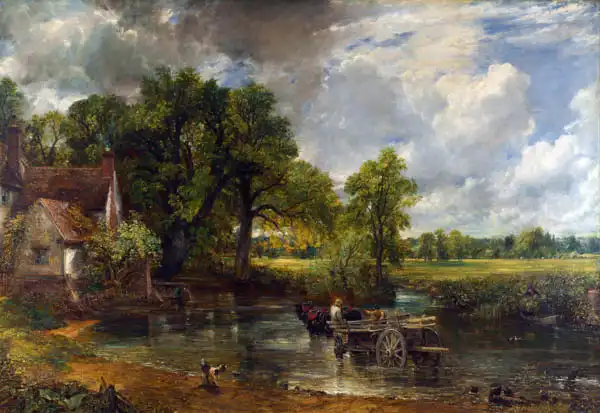
In dem Gemälde befindet sich ein Auto mit einem Hasen, der die Flussstunde watet (in der viele Gemälde von Constabl im Tal geschaffen wurden). Links befindet sich das Haus des Nachbarn Willi Lott des Autors. Das Bild ist ein außergewöhnliches Live -Grün, das Constable überlappte, die verschiedene Grüntöne und das Spielen von Licht und Farbe spielen.
Constable painted picture Die Heuwaage in 1821. Prevailing color of this fine art print is grün and its shape is landschaft. Original size is 130,2 x 185,4. This art piece is located in National Gallery, London, UK. This image is printed on demand - you can choose material, size and finishing.
John Constable (1776 - 1837). English painter during Romanticism. He was the son of a miller in Suffolk County and since childhood, he dreamed of becoming one of the best landscape painters of the 19th century. At last, painting really became the sole purpose of his existence. In December 1817, he moved to London with his wife, and there the first of their seven children was born. Children then followed almost invariably each year, but it was very difficult and exhausting to feed such a large family. Landscape painting was not recognized nor a much profitable profession in England in the 19th century. John and Mary worked very hard, which later destroyed their health. Despite this, however, gradually the first significant successes arrived. In 1819, John Constable became an associate member of the Royal Academy of Arts. Two years later, he painted his most famous work Hay Wagon. He exhibited it in London, but he came to fame in 1824 when this image received the gold medal at the Salon in Paris. The local appraisal was full of recognition, but in England his work was viewed with reserve. A year later, although he was accepted as a full member of the Royal Academy of Arts, he exhibited a grim picture, Hadleigh Castle, which expressed grief over the death of his wife. He entrusted their seven children to a nurse, but he still cared for them very well and conscientiously. A very renowned piece is Wivenhoe Park of 1816. In 1833, however, he fell ill and was greatly plagued by old age. To conserve his strength, he painted only less demanding watercolours. Finally, Constable died after a stroke in 1837. His paintings were sold for a small amount auction, and his work achieved recognition many years later.
Trusted by our customers. Our customers have been satisfied with us for a long time. We appreciate it and thank you for your trust. You can find more reviews and details of our service ratings on Trustpilot.com.




 776 273 496
