Craftfineart.com
Search
de
Oblíbené položky
Košík
UNSER SOMMERRABATT IST AUFGETAUCHT,
VERWENDEN SIE DEN CODE sale10
×
Unsere Gestaltungsvorschläge:
einfachheit
eleganz
modern
vintage
klassisch


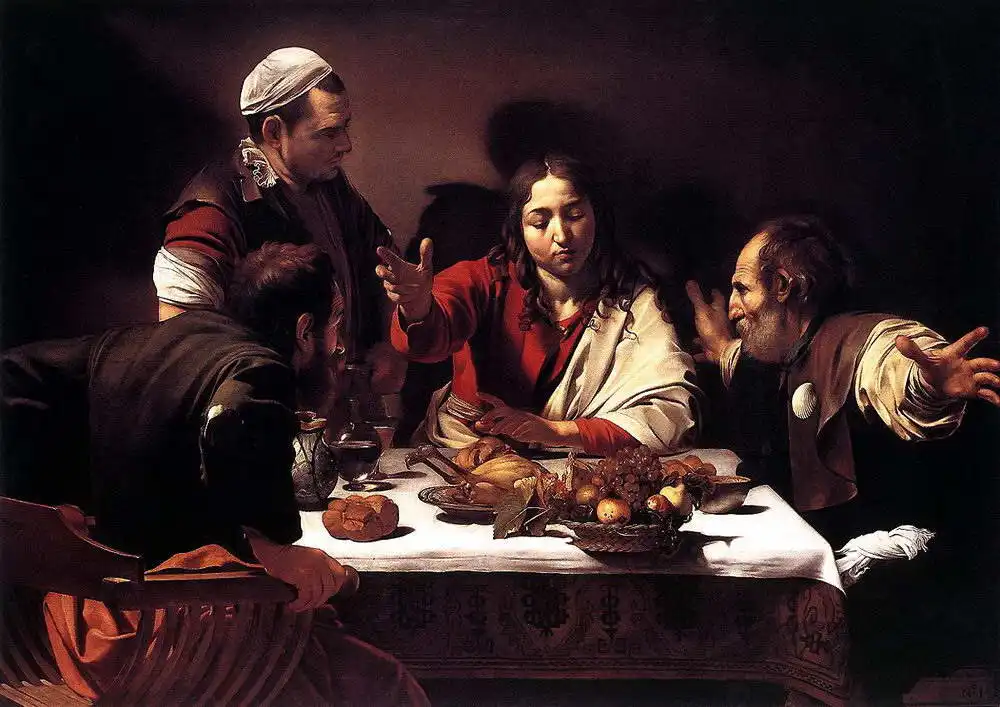
Abendmahl in Emmaus

ID: #1388 | TOP 100 | Barock | Religiös

Date: 1601
Medium: oil and tempera, board
Location: National Gallery, London, UK
Dimensions: 196 x 141

Automatisch übersetzter Text. Bitte entschuldigen Sie alle Fehler!

Der Apostel Kleophas trägt eine Kanalplatte, ein Symbol für Pilger und Gesten mit ganzen Armen. Der Apostel Luke hat Kleidung zerrissen. Jesus ist hier trotz aller gemeinsamen Traditionen, die ohne Bart dargestellt werden. Der vierte Mann scheint Säuglinge zu sein, sein Gesicht ist im Schatten versteckt. Das Bild ist für Lebenszeichen ungewöhnlich - der Hintergrund ist dunkel und leer. Auf dem Tisch liegt Lebensmittel, die als typisches Stillleben angeordnet sind. Wie die Welt, die die Jünger kannten, steht ein Korb mit Früchten am Rand des Tisches kurz vor dem Zusammenbruch. Caravaggio malte 1606 eine andere Version derselben Szene und zeigte Jesus klassisch mit Bart.

Caravaggio painted picture Abendmahl in Emmaus in 1601. Prevailing color of this fine art print is dunkel and its shape is landschaft. Original size is 196 x 141. This art piece is located in National Gallery, London, UK. This image is printed on demand - you can choose material, size and finishing.

Caravaggio (Merisi Michalengelo) (1571-1610). Italian Baroque painter, who in his short life was significantly influenced by Baroque painting. Born to a family of architects in Caravaggio, he was an unwary adventurer who liked teasing and toying with fate. In his early works, he preferred realism. He worked with light and shadow, combining natural and architectural elements. He captured dramatic scenes (and his images are very sensational) by utilising hyperrealism and an impressive use of light and shadow. An intense light side, which he started using, helped him add intensity to colours and link the composition into one unit. Light, intense colours, and choice of motifs (often with the presence of death) are the cornerstones of his work, which indelibly influenced the history of art.

Motif size

Total size: 80 x 57 cm

Material


Finishing


Frame & passepartout

colour of passepartout
none

Selected finishing

Matte paper (print)
Share this settingShare this setting
Print. The image is printed on the top quality 10-ink HP Z9PS printer on HP matte 270 g / m2 paper. You can choose any size to an accuracy of 1 cm. A margin of 5 cm around the image is added to the size of the motif.

ZoomZoom

You can find a detailed description about our finishings here.

:
38 €

Shipping date: 2 days

Abendmahl in Emmaus

ID: #1388 | TOP 100 | Barock | Religiös

Date: 1601
Medium: oil and tempera, board
Location: National Gallery, London, UK
Dimensions: 196 x 141

Automatisch übersetzter Text. Bitte entschuldigen Sie alle Fehler!

Der Apostel Kleophas trägt eine Kanalplatte, ein Symbol für Pilger und Gesten mit ganzen Armen. Der Apostel Luke hat Kleidung zerrissen. Jesus ist hier trotz aller gemeinsamen Traditionen, die ohne Bart dargestellt werden. Der vierte Mann scheint Säuglinge zu sein, sein Gesicht ist im Schatten versteckt. Das Bild ist für Lebenszeichen ungewöhnlich - der Hintergrund ist dunkel und leer. Auf dem Tisch liegt Lebensmittel, die als typisches Stillleben angeordnet sind. Wie die Welt, die die Jünger kannten, steht ein Korb mit Früchten am Rand des Tisches kurz vor dem Zusammenbruch. Caravaggio malte 1606 eine andere Version derselben Szene und zeigte Jesus klassisch mit Bart.

Caravaggio painted picture Abendmahl in Emmaus in 1601. Prevailing color of this fine art print is dunkel and its shape is landschaft. Original size is 196 x 141. This art piece is located in National Gallery, London, UK. This image is printed on demand - you can choose material, size and finishing.

Caravaggio (Merisi Michalengelo) (1571-1610). Italian Baroque painter, who in his short life was significantly influenced by Baroque painting. Born to a family of architects in Caravaggio, he was an unwary adventurer who liked teasing and toying with fate. In his early works, he preferred realism. He worked with light and shadow, combining natural and architectural elements. He captured dramatic scenes (and his images are very sensational) by utilising hyperrealism and an impressive use of light and shadow. An intense light side, which he started using, helped him add intensity to colours and link the composition into one unit. Light, intense colours, and choice of motifs (often with the presence of death) are the cornerstones of his work, which indelibly influenced the history of art.


How do we make our pictures (detailed view)

Our reviews from Trustpilot.com

Trusted by our customers. Our customers have been satisfied with us for a long time. We appreciate it and thank you for your trust. You can find more reviews and details of our service ratings on Trustpilot.com.

You might like


80 x 57 cm
38 €